
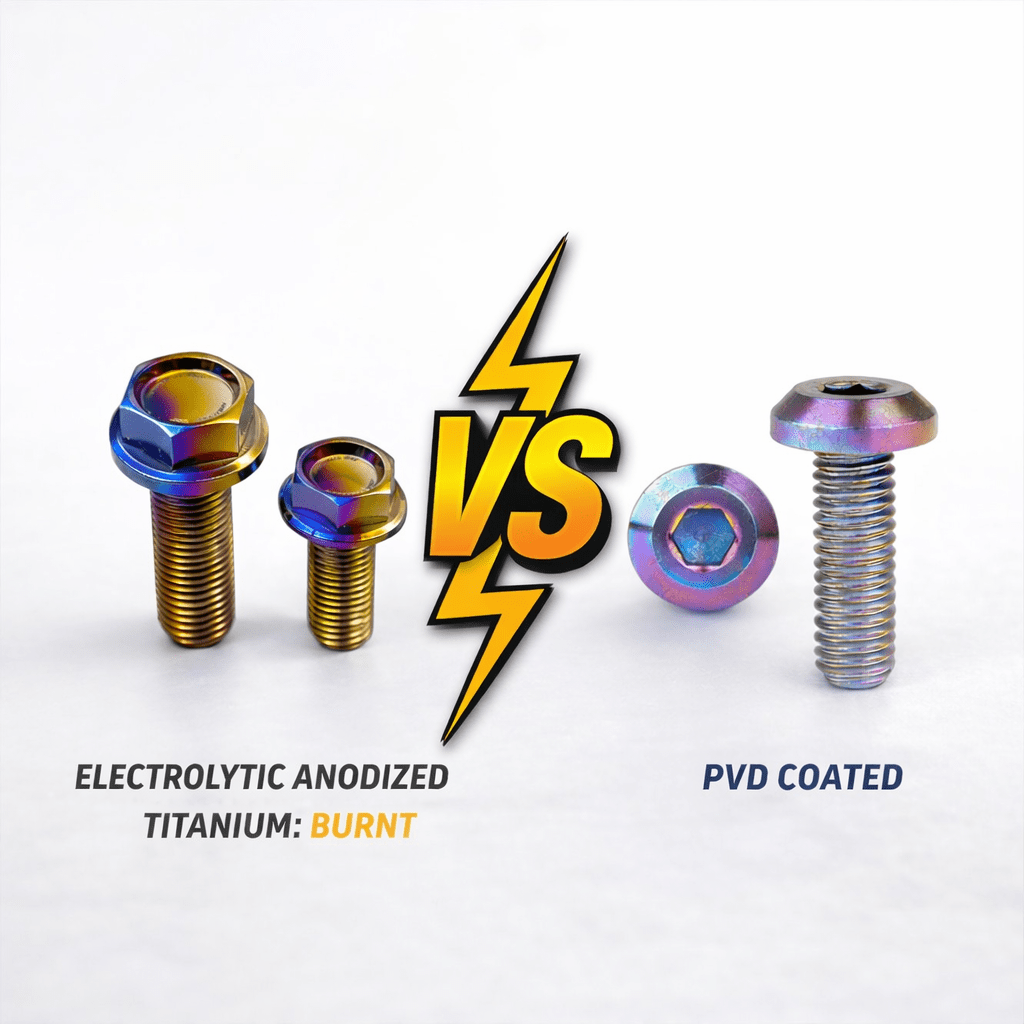
Electrolytic Anodized Titanium vs PVD Coated Titanium Hardware: What’s the Difference?
When choosing titanium hardware for automotive applications, the finishing process matters just as much as the material itself. At JD Customs USA (JDC Titanium), we use a proprietary electrolytic anodizing process to produce vibrant, durable finishes that become part of the titanium itself rather than sitting on top as a coating.
Many customers come to us after experiencing problems with PVD coated titanium hardware, especially issues like cracking, peeling, or surface wear over time. Understanding the difference between electrolytically anodized titanium and PVD coated titanium helps ensure you choose hardware that will hold up in real automotive environments.
Why Titanium Hardware Is Popular in Engine Bays
Titanium hardware has become increasingly popular in engine bays, exterior components, and interior applications because of its strength, corrosion resistance, and lightweight properties. Enthusiasts also value titanium for its unique finishes, especially anodized titanium bolts that add a high-end motorsport look.
Modern performance vehicles expose hardware to extreme conditions including heat cycles, vibration, and chemical exposure. That’s why many builders choose titanium engine bay hardware that offers both durability and aesthetics.
What Is Electrolytic Anodizing?
Electrolytic anodizing is an electrochemical process that grows a controlled oxide layer on the surface of titanium using electricity and an electrolyte solution. Instead of applying paint or plating, the process alters the metal itself.
The colors seen in anodized titanium are created through thin-film interference, meaning the finish is part of the titanium surface rather than a separate coating.
At JDC Titanium, our proprietary electrolytic anodizing process is optimized specifically for automotive hardware, ensuring the finish holds up under heat, vibration, and real-world driving conditions.
This is one of the main reasons customers searching for automotive titanium hardware often choose anodized finishes over coated alternatives.
Benefits of Electrolytically Anodized Titanium Hardware
Electrolytically anodized titanium offers several advantages in automotive applications:
- Color becomes part of the metal surface
- Will not peel or flake like coatings
- Excellent resistance to heat
- UV exposure proof (the sun will NEVER fade anodized titanium)
- Maintains titanium’s natural corrosion resistance
- No added thickness that affects tolerances
- Ideal for engine bays, suspension hardware, and exterior applications
Because anodizing does not add material thickness, titanium bolts and washers maintain their precise fit and torque characteristics, which is critical in performance builds.
What Is PVD Coating on Titanium Hardware?
PVD (Physical Vapor Deposition) is a coating process where a thin layer of material is deposited onto the surface of a part in a vacuum chamber. While PVD coatings can look impressive initially, they remain a bonded layer separate from the titanium itself.
In decorative applications, PVD coatings can perform well. However, in automotive environments, especially engine bays, repeated heat cycles and mechanical stress can accelerate coating wear.
Over time, PVD coatings may experience:
- Micro-cracking from vibration
- Peeling or flaking at edges
- Wear at contact points
- Chipping during installation or removal
We regularly hear from customers who switched to JDC Titanium hardware after their PVD coated bolts began to peel or crack, particularly in high-heat engine bay environments.
Electrolytic Anodized Titanium vs PVD Coated Titanium: Durability Comparison
| Feature | Electrolytically Anodized Titanium | PVD Coated Titanium |
|---|---|---|
| Peeling or flaking | Not Possible | Possible over time |
| Heat resistance | Excellent | Moderate to good |
| Added thickness | None | Thin coating layer |
| Scratch behavior | Surface mark only | Coating damage visible |
| Long-term appearance | Stable, life-long appearance | Can degrade |
| Engine bay suitability | Excellent | Limited in some applications |
Why Engine Bays Are Tough on Hardware Finishes
Engine bays and performance vehicles expose hardware to some of the harshest conditions found in automotive environments:
- High temperatures and repeated heat cycles
- Oil, fuel, and chemical exposure
- Constant vibration
- Mechanical stress and torque loads
Coatings rely on adhesion to remain intact. Once that bond begins to weaken, cracking or peeling can occur. Electrolytically anodized titanium avoids this issue because there is no coating layer to separate.
Why Many Customers Switch from PVD Coated Hardware to Anodized Titanium
A common scenario we see:
A customer installs PVD coated hardware because it looks great initially. After months of real driving, heat cycles, and maintenance, they begin to notice peeling edges, cracking finishes, or dull spots.
They replace it with anodized titanium bolts or other anodized hardware from JDC and don’t experience the same issues again.
That’s because anodizing works with the metal itself rather than relying on a bonded coating.
Best Uses for Electrolytically Anodized Titanium Hardware
Electrolytically anodized titanium is ideal for:
- Titanium engine bay bolts
- Titanium dress-up hardware
- Titanium washers
- Titanium badges
- Custom titanium hardware
These applications benefit from both durability and appearance, making anodized titanium a preferred choice for enthusiasts and professional builders alike.
Why Enthusiasts Choose JDC Titanium
At JD Customs USA, titanium hardware isn’t just another product category, it’s one of our core specialties. Our finishing processes, quality control, and attention to detail are designed specifically to perform in both automotive use and decorative applications.
We specialize in anodized titanium bolts, titanium washers, and custom titanium hardware for performance cars, producing parts that look incredible and hold up in real driving conditions.
Because in a high-quality build, the details matter.
Frequently Asked Questions About Titanium Hardware
Does anodized titanium peel or chip?
Nope! Electrolytic anodizing changes the oxide layer of the titanium itself rather than applying a coating, so there is no layer to peel or flake.
Is anodized titanium good for engine bays?
Yes. Anodized titanium performs extremely well in engine bays because it resists heat, corrosion, and vibration better than many coated finishes.
Why does PVD coating peel on bolts?
PVD coatings are bonded to the surface rather than integrated into the metal. Heat cycles, torque, and vibration can eventually cause cracking or separation in demanding environments.
Final Thoughts
When comparing electrolytically anodized titanium vs PVD coated titanium, the biggest difference comes down to durability and long-term performance.
If you want titanium hardware that:
- Won’t peel
- Won’t flake
- Maintains vibrant color
- Performs in real automotive environments
Electrolytically anodized titanium is the clear choice.
Shop Titanium Hardware for Your Build
If you're upgrading your engine bay or finishing a build, explore our selection of premium titanium hardware designed specifically for automotive applications:
- Anodized titanium bolts for engine bays
- Titanium washers, nuts, studs, and more hardware for performance cars
- Custom titanium badges and plaques
- Titanium dress-up hardware for interior and exterior use


Share:
How to Upgrade Your Car Without Killing Its Resale Value
GTR vs Denso Coils - What’s The Difference?