


The BMW F80 M3 and G80 M3 represent two distinct turbocharged M-car eras. The F80 introduced the S55 and paired it with either a six-speed manual or seven-speed dual-clutch transmission, all with rear-wheel drive. The G80 moved to the S58, retained a manual base configuration, adopted an eight-speed automatic for Competition models, and added available M xDrive.
The F80 appeals to drivers who want smaller dimensions, a sharper and more mechanical feel, and the distinctive response of BMW’s dual-clutch era. The G80 delivers more factory capability through greater power, cooling capacity, traction, rigidity, and electronic configurability.
Choosing between them should not come down to which car produces the larger dyno number. Condition, transmission preference, drivetrain layout, daily use, modification goals, service history, and total build cost matter more than one headline specification.
BMW F80 M3 vs. G80 M3 at a Glance
| Category | BMW F80 M3 | BMW G80 M3 |
|---|---|---|
| Engine | S55 3.0-liter twin-turbo inline-six | S58 3.0-liter twin-turbo inline-six |
| Transmissions | Six-speed manual or seven-speed DCT | Six-speed manual or eight-speed automatic |
| Drivetrain | Rear-wheel drive | Rear-wheel drive or available M xDrive |
| Driving character | Lighter-feeling, sharper, and more mechanical | Faster, more stable, and more configurable |
| Primary appeal | Compact dimensions, DCT character, and lower entry cost | S58 performance, modern technology, and available all-wheel-drive traction |
| Primary tradeoff | Older-car maintenance and greater dependence on previous ownership quality | More mass, greater complexity, and higher purchase and consumable costs |
BMW F80 M3: The Compact Modern Classic
The F80 occupies an important position in BMW M history. It was the first turbocharged M3 sedan and introduced the S55, but it retained dimensions and responses that still feel connected to earlier, more analog M cars.
Its smaller footprint is immediately noticeable on narrow roads and in daily use. The chassis feels eager to rotate, the steering and drivetrain responses are direct, and the seven-speed DCT gives the car a distinct mechanical intensity that newer torque-converter automatics do not replicate exactly.
The F80 also offers a lower entry price than the G80 in many comparisons. That can leave room for maintenance, tires, brakes, suspension work, and carefully selected performance upgrades.
Age is now part of every F80 purchase. Service history, fluid maintenance, previous calibration, track use, collision repair, and the condition of wear components can matter more than mileage alone. A cheaper F80 with deferred maintenance can quickly lose its apparent price advantage.
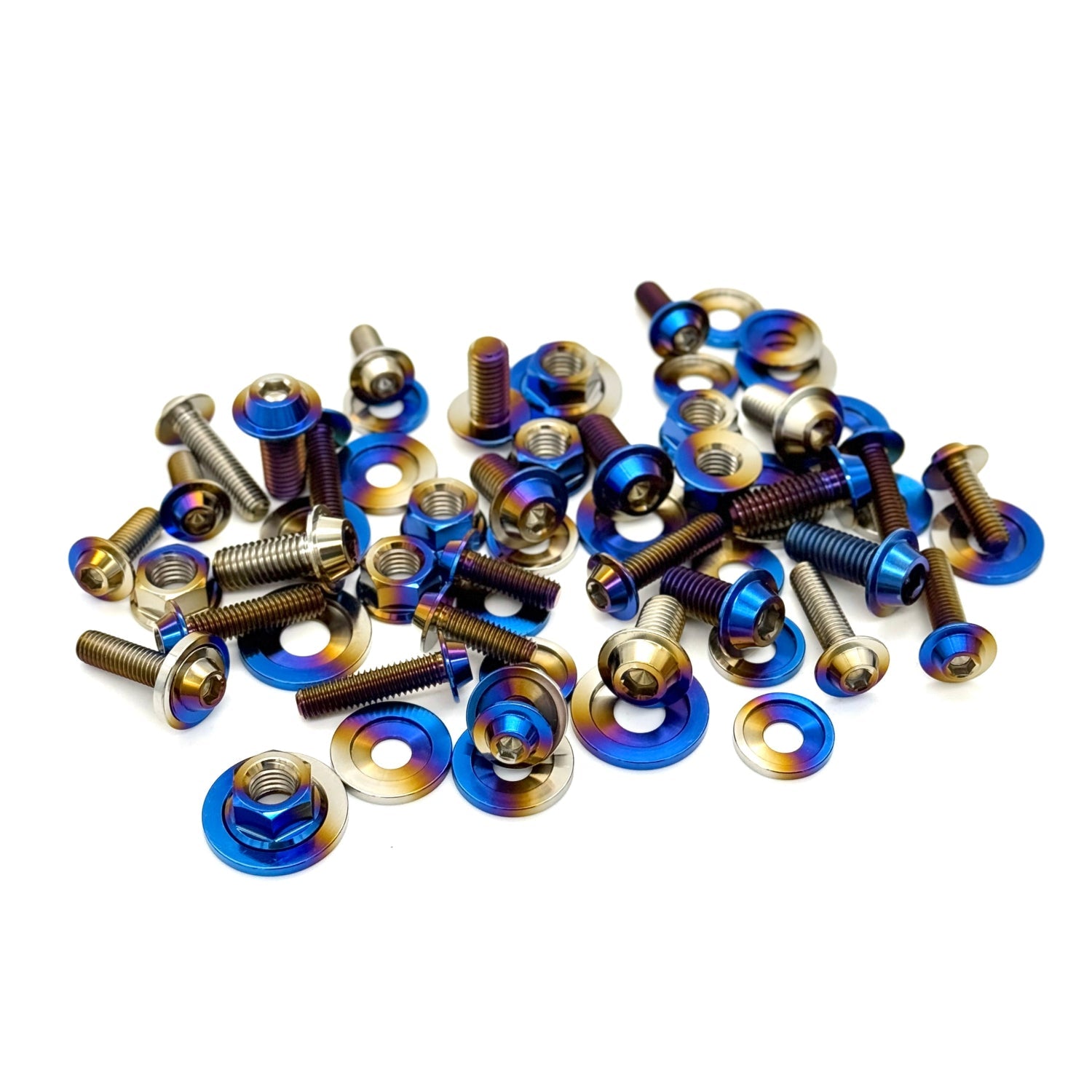
After the maintenance baseline is established, F80 owners who want a consistent engine-bay finish can use JDC's chassis-specific hardware kit rather than assembling universal fasteners one position at a time. Confirm the included mounting points and exact F80 configuration before ordering.
JDC Titanium Engine Bay Dress-Up Hardware Kit | 2014-2020 BMW F80/F82 M3/M4
BMW G80 M3: The S58 and M xDrive Era
The G80 moved the M3 into a more technologically integrated and higher-capability era. Its S58 provides greater factory airflow and output, while the chassis adds more cooling capacity, rigidity, braking capability, and configurable electronic control.
Available M xDrive changes the performance equation significantly. The G80 can deploy power in conditions where a rear-wheel-drive F80 may be limited by tire grip, road surface, or driver restraint. That matters on the street, at the drag strip, and in mixed-weather use.
The G80 also offers updated safety technology, a more modern cabin, and greater daily refinement. It can behave like a comfortable commuter and then deliver extremely serious acceleration and track performance when configured appropriately.
The tradeoffs are size, mass, complexity, and cost. The G80 may feel less delicate than the F80, and its broader capability can increase tire, brake, and fluid consumption when driven hard.
G80 owners finishing the newer engine bay can use JDC's 2021–2026 M3/M4 hardware kit for a platform-specific set of visible fasteners. Review the included locations and exact body-style fitment instead of assuming it shares hardware with the F80 kit.
JDC Titanium Engine Bay Dress-Up Hardware Kit | 2021-2026 BMW M3/M4
S55 vs. S58 Performance Character
The S55 and S58 are both 3.0-liter twin-turbo inline-sixes, but they belong to different engine-development eras. The S55 has a mature aftermarket and extensive real-world tuning history. The S58 begins with newer architecture, greater factory airflow, and a package designed around higher output and sustained performance.
The F80’s lower mass and direct drivetrain behavior can make the S55 feel aggressive even when the car produces less power than a comparable G80. The G80’s S58 delivers stronger acceleration and greater performance capacity, particularly when paired with M xDrive.
Neither engine should be judged by an internet power limit. The correct answer depends on the exact engine, fuel, calibration, torque curve, turbo system, cooling, and duty cycle.
A peak dyno result does not describe ignition correction, fuel-pressure stability, charge temperature, heat recovery, transmission load, or durability during repeated use.
DCT vs. Eight-Speed Automatic
The F80’s seven-speed DCT is one of the platform’s defining features. It can shift with a sharp, mechanical character that adds drama and involvement during spirited driving. Buyers who specifically want that experience may prefer the F80 even when the G80 is faster.
The G80 Competition uses an eight-speed automatic. It provides smooth low-speed behavior, quick shifts, and broad daily usability. Paired with M xDrive, it also helps the car launch and accelerate with remarkable consistency.
Both generations offer a six-speed manual, but the complete configurations differ. Transmission choice should be decided before purchase because it affects the engine specification, drivetrain layout, vehicle character, and modification path.
As torque increases, the transmission cannot be evaluated alone. Clutch capacity, transmission calibration, differential behavior, driveshafts, axles, mounts, and tires all become part of the plan.
Rear-Wheel Drive vs. M xDrive
Every F80 M3 is rear-wheel drive. That gives the car a traditional M-car layout and rewards careful throttle control, tire selection, and chassis setup.
The G80 can also be configured with rear-wheel drive, but available M xDrive adds another level of traction. For high-output street builds, the ability to distribute torque through all four tires can make the car substantially easier to use.
All-wheel drive does not eliminate the need for correct tires, alignment, differential service, or drivetrain planning. It adds components, weight, and complexity while improving acceleration and poor-weather usability.
The best drivetrain depends on the purpose. A driver seeking traditional rear-wheel-drive balance may prefer the F80 or a rear-wheel-drive G80. A driver prioritizing repeatable acceleration and all-weather traction may find M xDrive decisive.
Handling, Size, and Road Feel
The F80 generally feels smaller and more immediate. Its dimensions make it easier to place on narrow roads, while its lower mass contributes to a more agile character.
The G80 feels more planted and stable. Its wider body, greater rigidity, and larger performance envelope support higher speeds and stronger traction, but the car occupies more physical space and can feel less delicate.
Neither car should be judged by weight alone. Tires, alignment, dampers, bushings, ride height, differential behavior, brake confidence, and driver familiarity strongly influence real-world pace.
For F80 owners who want adjustable damping and ride height after inspecting the existing suspension, the KW V3 kit is a chassis-specific option to evaluate. Setup should preserve usable travel, alignment range, tire clearance, and the ride quality required for the car's actual use.
KW V3 Coilover Kit 15 BMW F80/F82 M3/M4 (KWS352200AN)
A proper test drive should include broken pavement, highway speeds, tight corners, low-speed maneuvering, parking, and enough time to evaluate seating, visibility, brake feel, and cabin noise.
Cooling, Fuel, and Supporting Systems
Both platforms require a complete-system approach as power and duty cycle increase. The S58 begins with greater factory cooling and airflow capability, but that does not make temperature or fuel data irrelevant.
Before tuning either car, inspect and log the systems that protect the engine and drivetrain:
- Fuel pressure and fuel quality
- Charge-air and coolant temperatures
- Oil level and temperature behavior
- Ignition correction and misfire history
- Turbo and boost-control operation
- Transmission and differential condition
- Tire grip and brake performance
- Cooling-system condition and heat recovery
Crank-hub discussions around the S55 should be evaluated in the context of the exact vehicle, calibration, torque delivery, use, and service history rather than reduced to slogans. The same principle applies to S58 power claims and upgrade recommendations.
When logs identify a charge-air cooling limitation on a compatible 2021+ G80 M3, the Mishimoto performance intercooler is one S58-specific option to review with the tuner. Installation requirements, surrounding cooling-system condition, and calibration should be considered together.
Mishimoto 2021+ BMW G80 M3/M4 Performance Intercooler - Black (MISMMINT-G80-21BK)
Important: Do not perform sustained high-load testing when fuel pressure, temperatures, brakes, tires, or engine condition are uncertain. ECU calibration, fuel-system changes, internal engine work, and safety-critical installation should be handled by qualified professionals.
Track Use and Consumable Costs
The G80 offers greater factory capability for repeated high-load use. Its cooling, braking, traction, and chassis systems allow it to sustain a high level of performance, but the car’s mass and speed can increase tire, brake-pad, rotor, and fluid consumption.
The F80 can be an engaging and capable track platform, especially when maintenance, alignment, cooling, brakes, and tire selection are handled carefully. Its smaller size and lower mass may reduce some consumable demands, although driving style and track layout remain major factors.
Peak output does not describe heat recovery or durability. Track preparation should be based on measured temperature, pressure, brake behavior, and wear across complete sessions.
Daily Use and Technology
The G80 provides the more modern daily-driving experience. Its newer cabin, driver-assistance features, available all-wheel drive, and refined automatic transmission can make it easier to use in traffic and changing weather.
The F80 feels simpler and more compact. Some owners prefer its cabin layout and more direct controls, while others may find its technology dated compared with the G80.
Daily-use priorities include:
- Parking and garage dimensions
- Manual, DCT, or automatic preference
- Rear-wheel drive or all-wheel drive
- Ride and road-noise tolerance
- Cabin technology
- Insurance and financing cost
- Tire and brake consumption
- Local service and diagnostic access
Compare Used Examples by Condition
Published specifications describe properly maintained cars in defined configurations. Used examples can feel dramatically different because of tires, alignment, software, maintenance, options, previous modifications, and accident repair.
When evaluating an F80, inspect:
- Service and fluid history
- Cold-start and warm-idle behavior
- Fuel, boost, and ignition faults
- DCT or manual-transmission condition
- Differential and driveline operation
- Cooling-system condition
- Previous tuning and hardware changes
- Suspension, brake, wheel, and tire wear
When evaluating a G80, review:
- ECU and transmission software history
- Previous fuel and boost changes
- Cooling and charge-air data
- M xDrive and differential behavior where equipped
- Tire and brake condition
- Diagnostic faults and warranty implications
- Wheel, suspension, and spacer fitment
Condition matters more than model reputation. A well-documented F80 may be a better purchase than a poorly modified G80, while a clean newer car may justify its higher price through reduced immediate repair needs.
Parts Compatibility and Fitment
The F80 and G80 are separate platforms. Wheel bolts, offsets, suspension components, electronics, brakes, engine hardware, and drivetrain parts should not be assumed to interchange.
Before ordering components, confirm:
- VIN and production date
- Exact chassis and body style
- Engine and ECU version
- Manual, DCT, or automatic transmission
- Rear-wheel drive or M xDrive
- Brake package
- Wheel size, offset, and clearance
- Required coding or calibration
A component that appears physically similar may still be electronically incompatible or unsuitable for the car’s drivetrain configuration.
Total Ownership and Finished-Build Cost
The F80 usually offers the lower purchase price, but deferred maintenance can erase the gap quickly. Older hoses, bushings, seals, fluids, brakes, tires, and modified components should be included in the budget before performance work begins.
The G80 costs more to acquire but may offer warranty potential, newer-car support, greater factory performance, and superior traction. Its larger tires, brakes, electronics, and higher capability can also increase ownership costs.
Create a complete budget that includes:
- Purchase price and financing
- Insurance and registration
- Immediate maintenance
- Tires, brakes, and fluids
- Cooling and fuel-system needs
- ECU and transmission calibration
- Suspension and alignment
- Professional diagnostic or installation work
- Track consumables
- Resale impact of modifications
The lower-cost F80 may require restoration before it reaches the same baseline. The more expensive G80 may include capability that a particular owner will never use. Compare finished builds rather than purchase prices alone.
Which M3 Should You Buy?
Choose the BMW F80 M3 When:
- You want smaller dimensions and a lighter-feeling chassis.
- You prefer the character of the seven-speed DCT.
- You want a lower purchase price and mature S55 aftermarket.
- You value a more mechanical, analog-feeling modern M3.
- You are prepared to inspect and maintain an older performance car carefully.
Choose the BMW G80 M3 When:
- You want S58 performance and greater factory capability.
- You value available M xDrive traction.
- You prefer current cabin technology and safety features.
- You want a newer platform with substantial cooling and tuning potential.
- Your budget supports the higher purchase and consumable costs.
Common F80 vs. G80 M3 Buying Mistakes
- Choosing solely by peak factory or tuned output
- Comparing modified cars without correcting for condition and parts quality
- Assuming newer automatically means more engaging
- Assuming lighter automatically means faster in every use case
- Ignoring deferred F80 maintenance when comparing purchase prices
- Increasing power before addressing fuel, cooling, tires, and brakes
- Assuming F80 and G80 parts share fitment
- Buying before deciding between manual, DCT, automatic, rear-wheel drive, and M xDrive
Frequently Asked Questions
Is the S58 better than the S55?
The S58 is newer and designed around higher factory output and greater cooling capacity. The S55 remains capable and well supported. Condition, target output, budget, transmission, and complete vehicle use should determine the better choice.
Is the G80 M3 faster than the F80 M3?
The G80 begins with greater factory capability, and M xDrive can improve traction substantially. Actual performance depends on specification, transmission, tires, conditions, driver, and modification level.
Which M3 is better for daily driving?
The G80 offers newer technology, available all-wheel drive, and greater refinement. The F80 is smaller and may be easier to place in traffic or tight parking. The better daily driver depends on size, ride tolerance, drivetrain preference, and running cost.
Which M3 is better for track use?
The G80 offers more cooling, traction, and factory performance capacity. The F80 counters with lower mass and a more compact chassis. Tires, brakes, fluids, alignment, maintenance, and driver consistency determine how either performs over complete sessions.
Is the F80 DCT better than the G80 automatic?
The F80 DCT offers a sharper and more mechanical shift character. The G80 eight-speed automatic provides smoother daily operation and strong acceleration consistency. The better choice depends on whether involvement or refinement matters more.
Do F80 and G80 M3 parts interchange?
Compatibility should not be assumed. Wheels, bolts, offsets, suspension, brakes, electronics, engine hardware, and drivetrain components differ by platform and specification.
Key Takeaways
| Decision Factor | BMW F80 M3 | BMW G80 M3 |
|---|---|---|
| Driving character | Smaller, sharper, and more mechanical | Faster, more stable, and more configurable |
| Engine platform | Mature S55 aftermarket with lower entry cost | Higher-capability S58 with greater factory airflow and cooling |
| Transmission identity | Manual or distinctive seven-speed DCT | Manual or refined eight-speed automatic |
| Drivetrain advantage | Traditional rear-wheel-drive layout | Rear-wheel drive or available M xDrive traction |
| Main buying rule | Compare exact cars in similar condition and calculate maintenance, consumables, and modifications before deciding which platform costs less. | |
Related JDC Guides
Choose the F80 M3 when compact dimensions, DCT character, lower entry cost, and a more mechanical driving experience fit the goal, or choose the G80 M3 when S58 performance, available M xDrive, current technology, and higher factory capability matter more. Explore our BMW G80 M3 turbo and boost upgrades for turbochargers, boost-control components, charge pipes, cooling hardware, fuel-system parts, and supporting S58 performance components.


